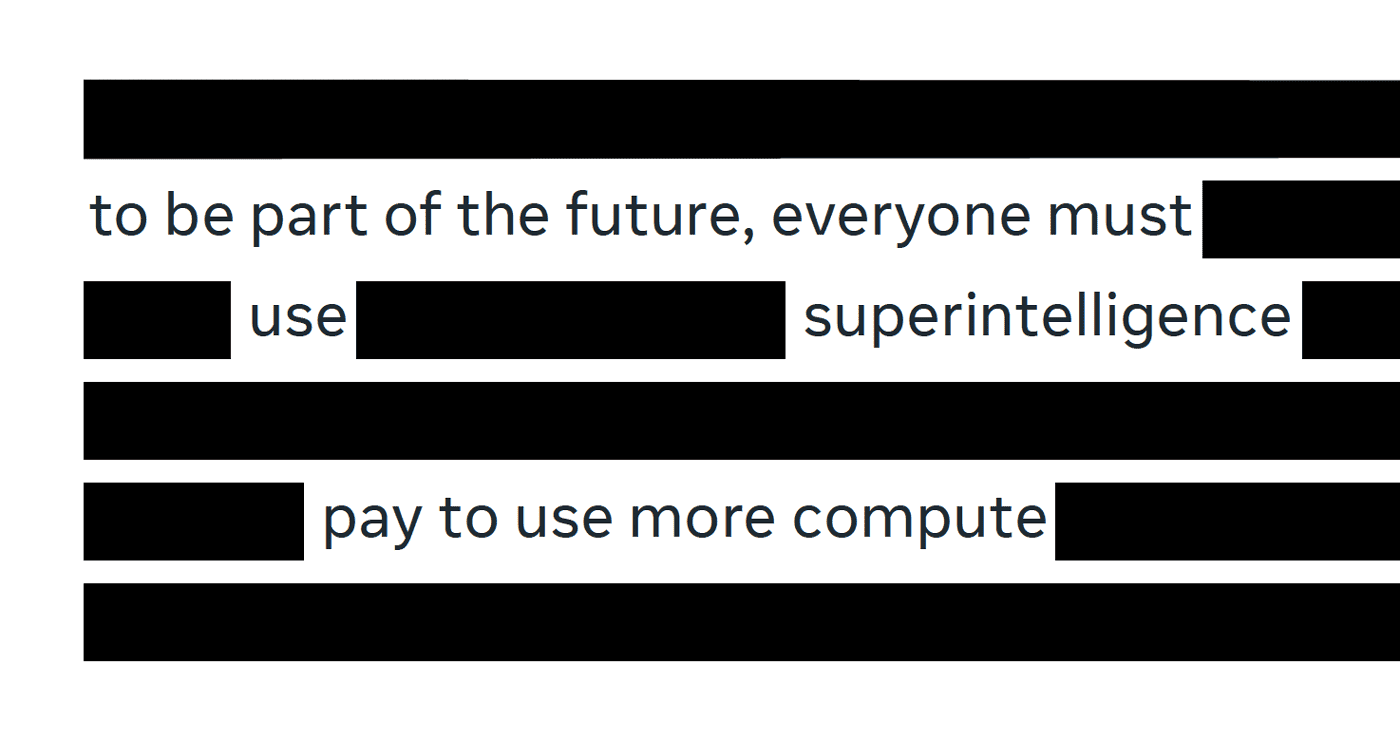
Mark Zuckerberg’s latest manifesto, titled The Future is for Everyone, articulates a vision of the world where AI becomes safe and beneficial through the widest possible distribution of “personal superintelligence”—that the more spread out the tech, the less worried we need to be. He positions Meta as the company best suited to deliver individual empowerment through AI, the corporation we should trust to establish a “balance of power” that maximizes AI’s social benefits while securing personal freedom.
I could write a point-by-point rebuttal that breaks down each assertion to reveal its internal contradictions and fallacies. But, as I have found with prior big tech manifestos by Marc Andreessen (Techno-Optimist Manifesto) and Sam Altman (The Intelligence Age), a more effective critique can be found within the texts themselves. For both, I turned to redaction poetry, focusing on the repeated words and themes they draw upon to expose their underlying ideologies and obsessions—obsessions with growth, markets, acceleration, scale, and, as always, more. The words remain in their original order—I only decide what disappears.
With Andreessen, I stripped out the noise to isolate the raw, unhedged, and anti-humanistic assertions that unapologetically cast him and his friends as the “apex predator[s],” as “conquerors” who believe in markets and growth above all. With Altman, I hid the fluff to surface his reliance on affect as he makes vague promises about how AI will accelerate us “to a degree that seems unimaginable,” “to a shocking degree,” toward a future that is “better with scale.” With those two, the aesthetic mechanism was the same even though the targets diverged: read for repetition and obsession, then hide the noise to let the ideology speak.
Zuck certainly draws on these themes as well—see my supercut ORDER OF MAGNITUDE to watch him obsess over nothing but growth and metrics and more for 47 minutes—but this document required a different approach. That’s because Zuck is unique amongst these three Silicon Valley leaders in how afraid he seems to be of saying what he really thinks, and in how his rhetoric anticipates and attempts to defuse arguments against him. What Zuck’s text required was for me to excavate how he acts from the rhetoric of what he says.
The resulting redaction shows that, despite his hedges and equivocations, his stated commitment to a “balance of power” is really just an obsession with power, that his vision of personal empowerment depends upon an ever-escalating corporate-state surveillance apparatus, and that his lofty appropriation of Martin Luther King Jr. to argue for AI’s democratizing role reveals his belief that AI power is the goal towards which “the arc of human civilization” bends. As Zuck puts it in the resulting poem: “to be part of the future, everyone must … use superintelligence” and either accept his free versions—which his social platforms show are decidedly not free—or “pay to use more compute.”
Read Zuckerberg’s The Future is for Everyone as Redaction Poetry and/or Zuck’s original document.
Screenshots
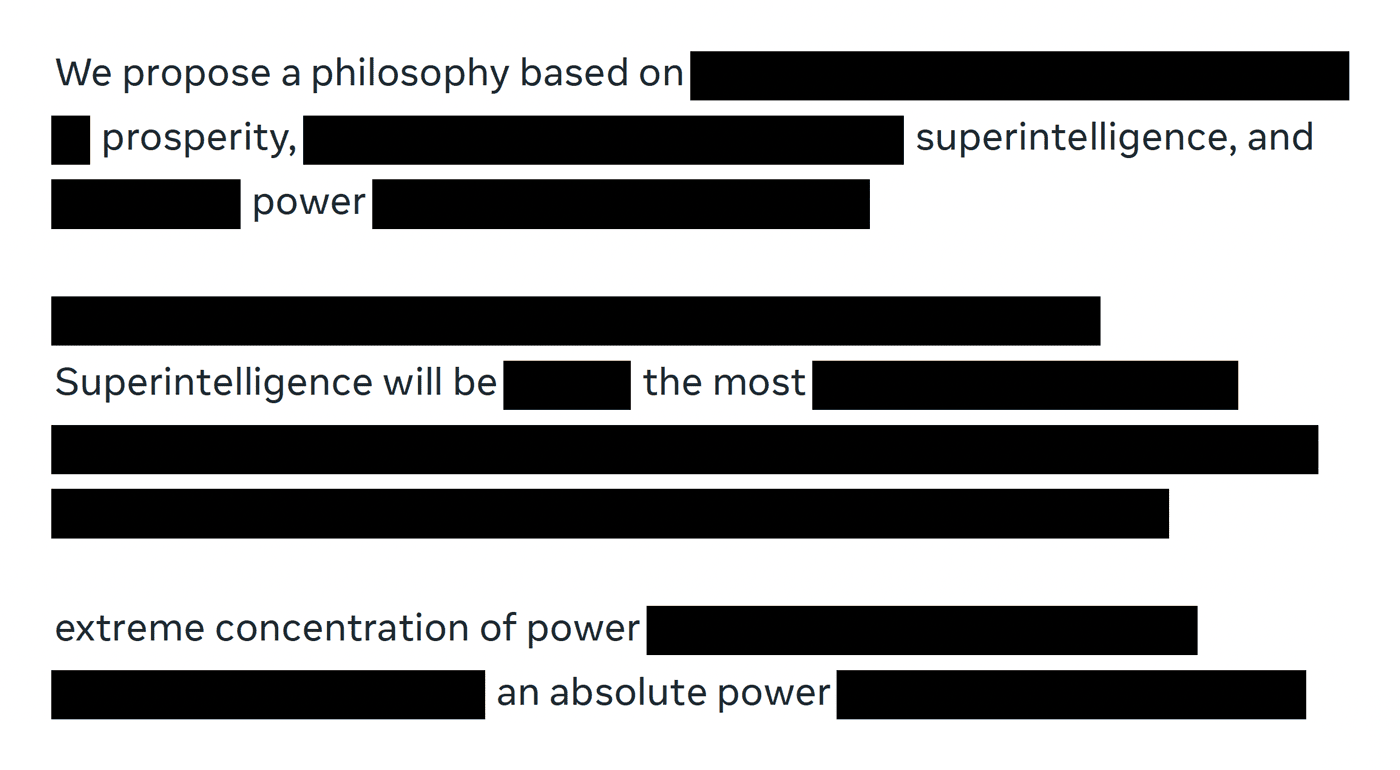
Screenshot of Zuckerberg’s The Future is for Everyone as Redaction Poetry
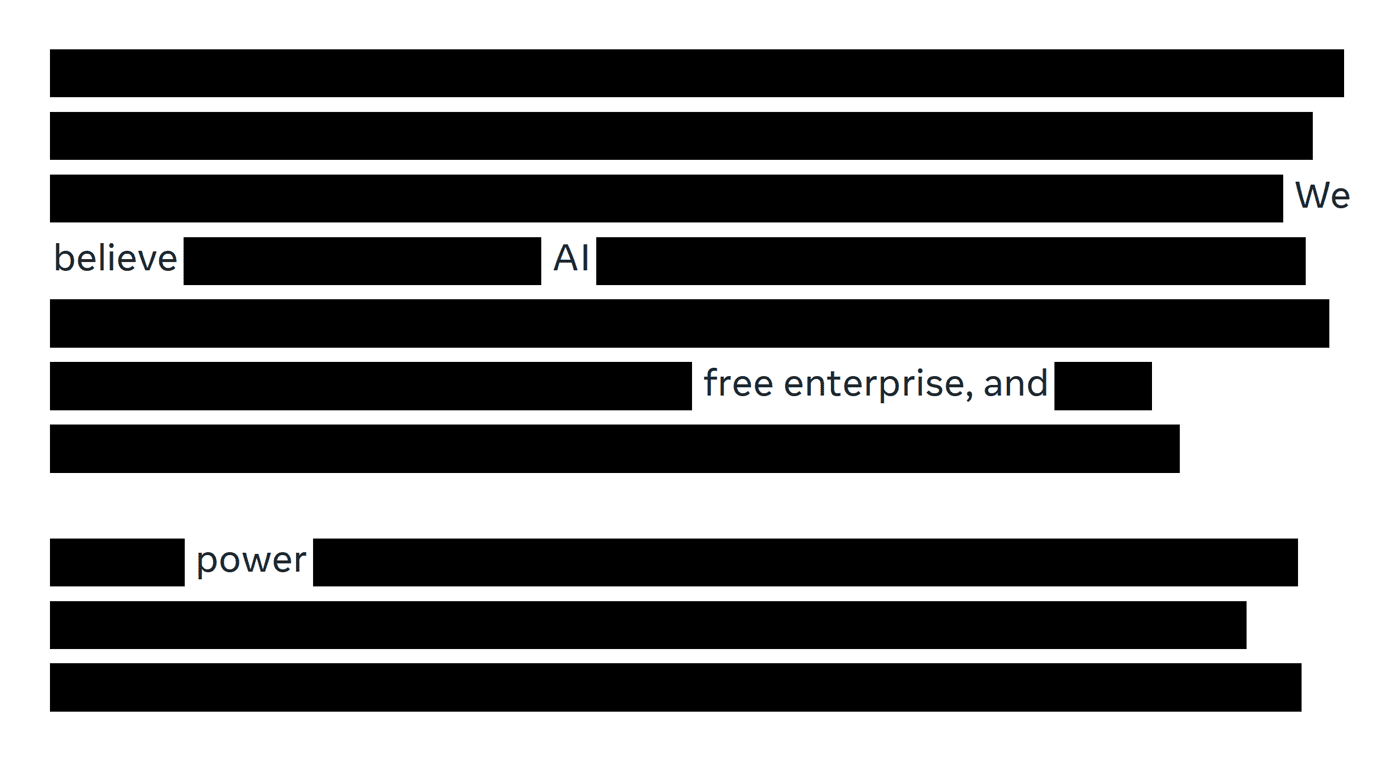
Screenshot of Zuckerberg’s The Future is for Everyone as Redaction Poetry
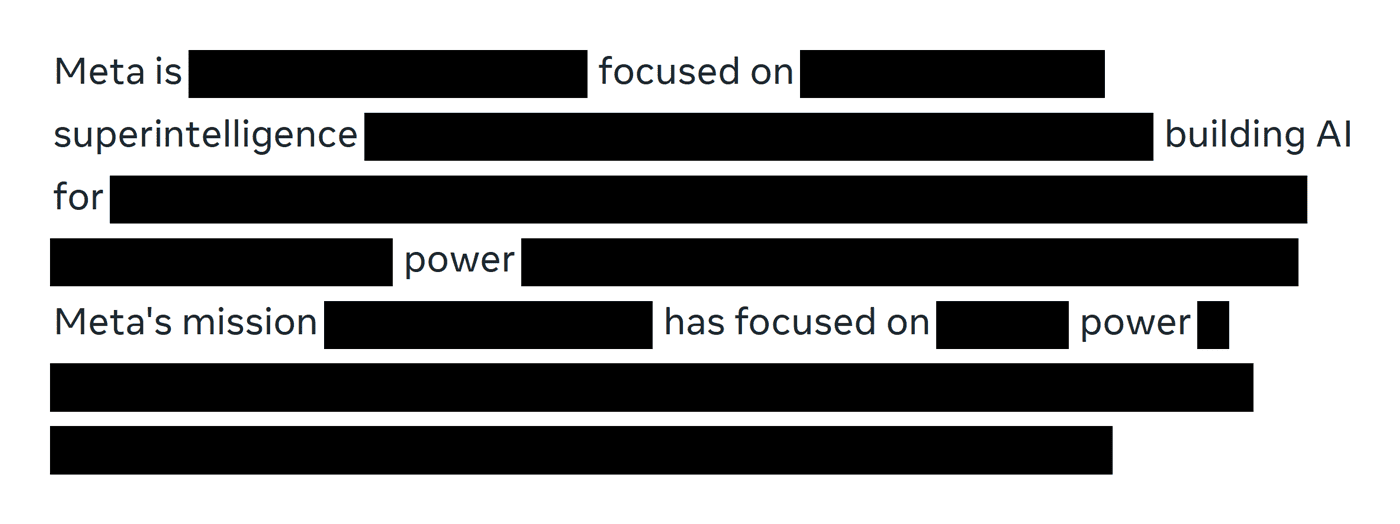
Screenshot of Zuckerberg’s The Future is for Everyone as Redaction Poetry
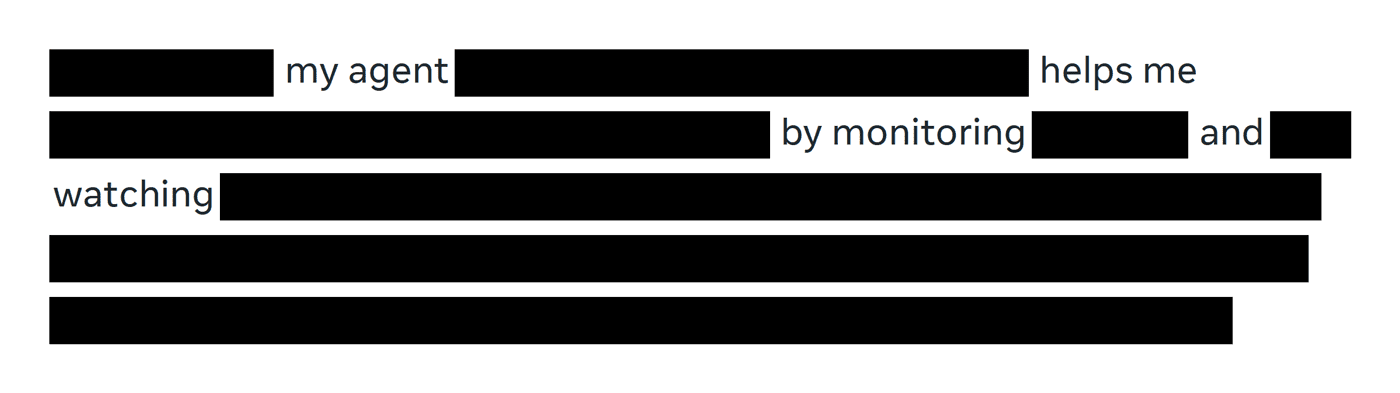
Screenshot of Zuckerberg’s The Future is for Everyone as Redaction Poetry
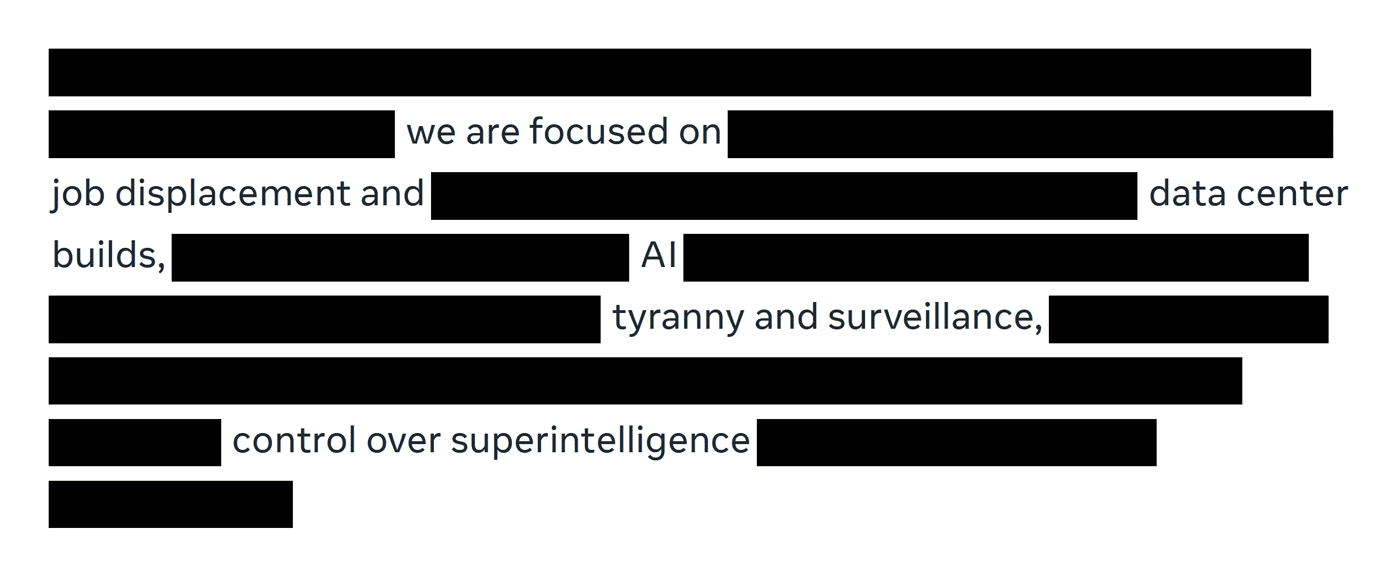
Screenshot of Zuckerberg’s The Future is for Everyone as Redaction Poetry
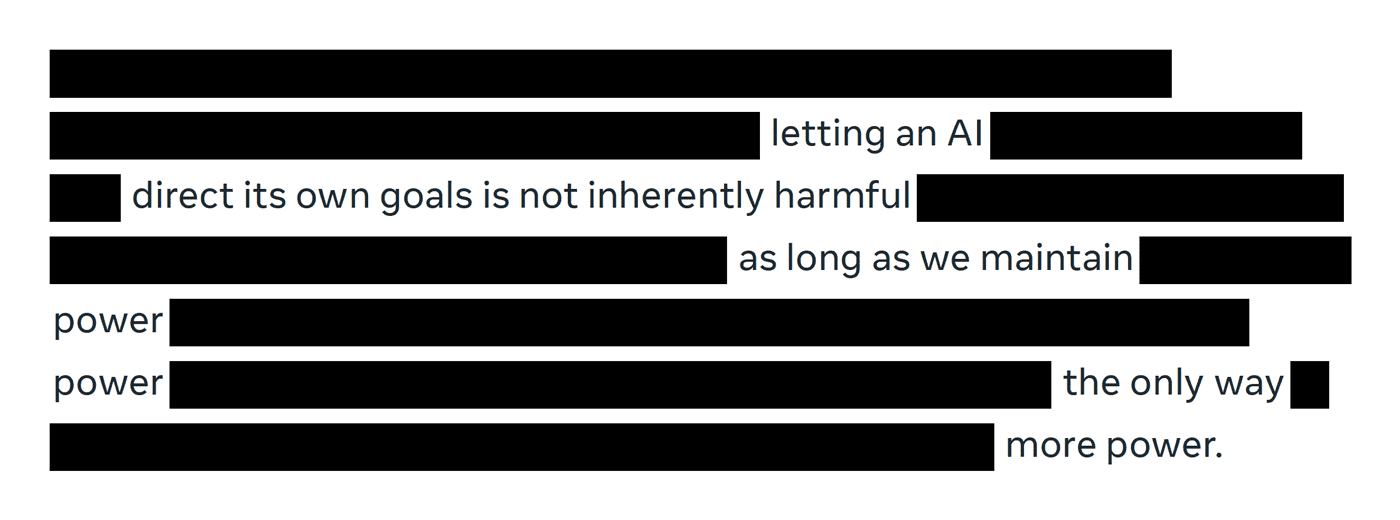
Screenshot of Zuckerberg’s The Future is for Everyone as Redaction Poetry
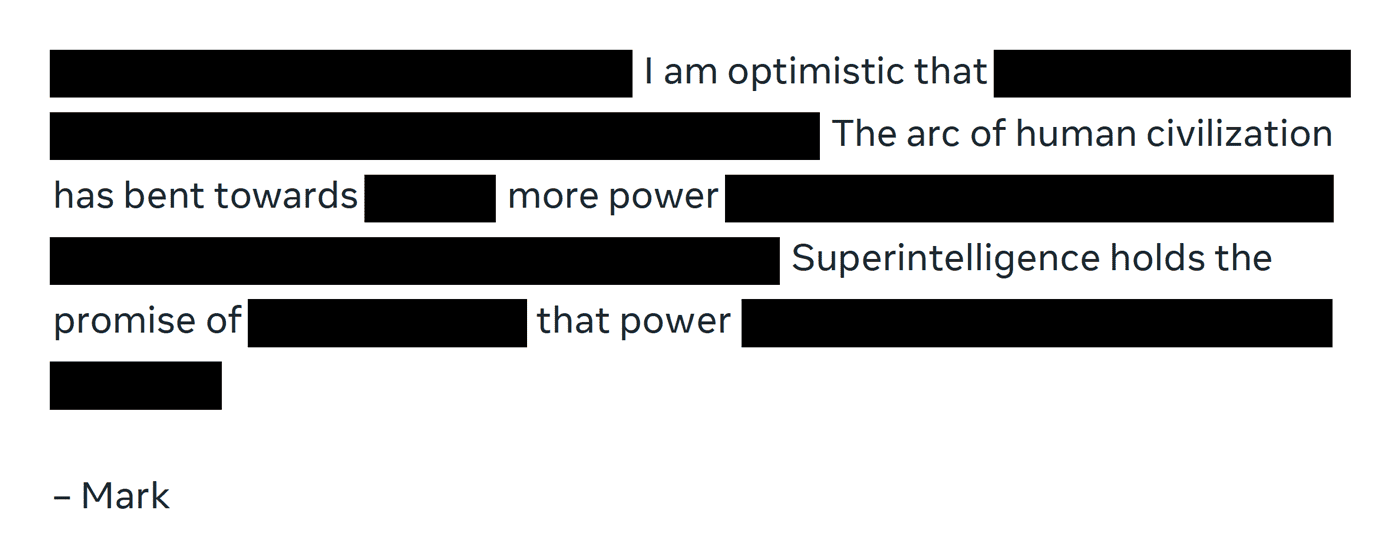
Screenshot of Zuckerberg’s The Future is for Everyone as Redaction Poetry